
The Hydrogen Economy: How the Next Wave of Clean Energy Will Change Business
Hydrogen and long-duration energy storage are reshaping energy systems. Explore how the hydrogen economy is redefining sustainable business advantage.
SUSTAINABILITY
1/5/20262 min read
The Hydrogen Economy: How the Next Wave of Clean Energy Will Change Business
For many years, business sustainability was mainly about using solar and wind power. While these energy sources are still important, they cannot meet all industrial needs on their own. Many businesses require continuous power, high temperatures, and reliable energy storage. This gap is now being filled by the hydrogen economy and next-generation renewable energy technologies.
What Is the Hydrogen Economy?
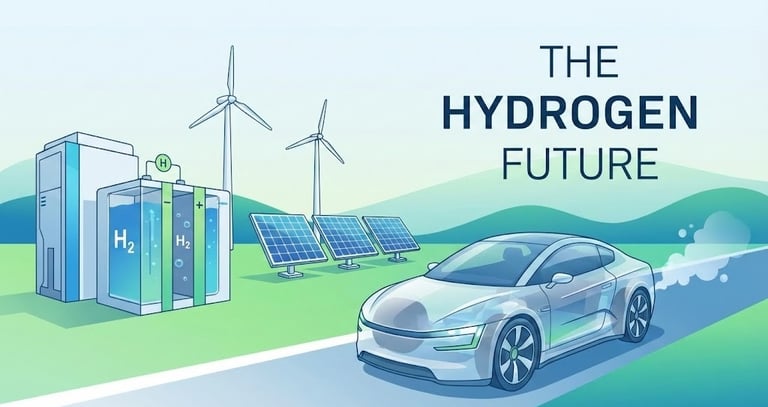
The hydrogen economy refers to using hydrogen as a clean fuel for power generation, industrial processes, and transportation. When hydrogen is used as energy, it emits only water, making it one of the cleanest fuel options available.
The most important form is green hydrogen, which is produced using renewable electricity such as solar or wind energy. Because no fossil fuels are used in its production, green hydrogen helps reduce emissions across the entire energy cycle.
Why Hydrogen Is Important for Businesses
Many industries cannot fully depend on direct renewable electricity. Solar and wind power are intermittent, and batteries alone are not sufficient for large-scale industrial operations. Hydrogen offers a solution by acting as both an energy carrier and a storage medium.
Industries where hydrogen is becoming especially relevant include:
Steel and cement manufacturing
Chemicals and fertilizers
Heavy transportation such as trucks, ships, and trains
Power generation and backup energy systems
For example, fertilizer plants already use hydrogen in production. Replacing conventional hydrogen with green hydrogen can significantly reduce carbon emissions without changing the basic process.
Next-Generation Renewables: Moving Beyond Solar and Wind
The transition to clean energy is not limited to hydrogen alone. Businesses are increasingly investing in advanced renewable systems that work together to ensure energy reliability.
Some key developments include:
Green hydrogen plants located near renewable energy sources
Long-duration energy storage systems that store power for days or weeks
Hybrid energy models combining solar, wind, batteries, and hydrogen
These systems allow companies to operate continuously while using clean energy, even when weather conditions affect renewable generation.
Government and Investor Push Behind Hydrogen
Governments across the world are actively supporting hydrogen through subsidies, incentives, and long-term energy policies. Many countries have announced hydrogen roadmaps as part of their net-zero commitments.
At the same time, investors are focusing more on sustainability and climate risk. Companies that adopt clean energy early are often viewed as more stable and future-ready. This helps them attract:
ESG-focused investors
Green financing and sustainability-linked loans
Long-term institutional capital
Business Benefits of Adopting Hydrogen
Adopting hydrogen and next-generation renewables is not just an environmental decision; it is a strategic business move. Over time, businesses can benefit in multiple ways.
Key advantages include:
Lower long-term energy costs
Reduced exposure to fossil fuel price fluctuations
Better compliance with future regulations
Stronger brand image and customer trust
Rather than being an extra cost, clean energy becomes a tool for resilience and competitiveness.
Challenges Today, Opportunities Tomorrow
Despite its potential, hydrogen adoption still faces challenges. High initial investment, limited infrastructure, and the need for skilled manpower are common concerns. However, similar challenges existed when solar energy was first introduced.
As technology improves and adoption increases, costs are expected to fall rapidly. Businesses that invest early will gain experience, scale advantages, and long-term cost benefits.
What This Means for the Future of Business
The future of business energy will be clean, flexible, and reliable. Hydrogen and next-generation renewables will play a key role in helping companies meet sustainability goals without compromising operational efficiency.Businesses that plan their energy transition today will be better prepared for stricter regulations, changing investor expectations, and a low-carbon economy. In the coming years, the hydrogen economy will not just support sustainable growth — it will redefine how businesses think about energy strategy itself.
If you like this article, then you can also check our other article on sustainability here.
Intellect Avenue
Explore articles that foster positive change.
intellectavenue24@gmail.com
© 2026. All rights reserved.